Seafood is farmed in a variety of ways:
- Extensively (not a lot of fish, lots of space) or intensively (lots of fish, less space).
- In ponds, cages, or tanks.
- Polyculture (with other crops) or monoculture (by themselves).
The best way to farm a fish depends entirely on the characteristics of which species you’re talking about.
Salmon: Intensive, cages or tanks, monoculture
Salmon grow well in groups, but require a lot of water to handle the amount of sludge (poop & extra feed) that the salmon produce. They need a lot of clean, clear water. Because of this, salmon are typically farmed in open-water cages in lakes or in massive tanks.
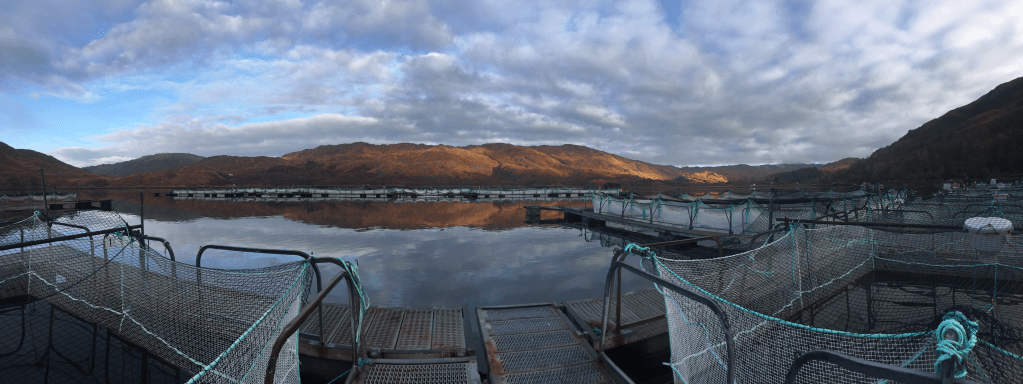
Photo Credit: Alexandra Pounds
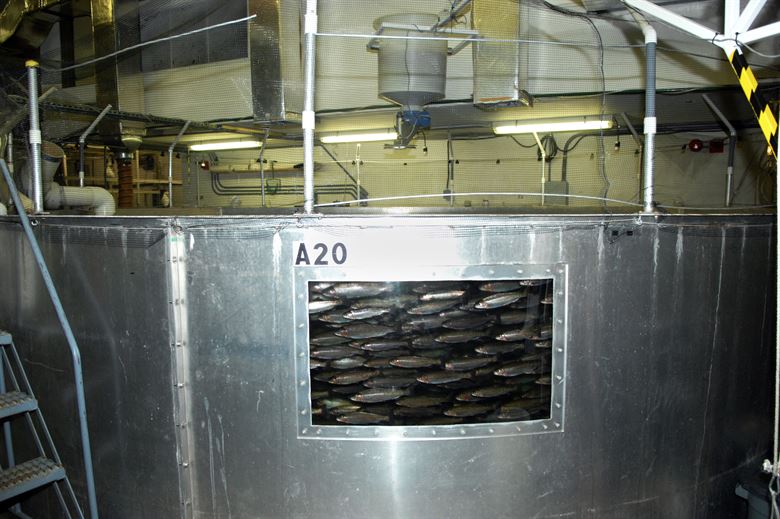
Photo Credit: https://www.pacaf.af.mil/News/Article-Display/Article/594944/new-hatchery-named-for-military-pioneer/
Catfish: Intensive, ponds or cages, polyculture or monoculture
In contrast, catfish will happily grow in muddy water filled with aquatic plants and other species. They are typically grown in ponds or cages, which are cheaper than tanks. Catfish will also grow without much space, so farmers can stock many of them in one pond.
_(6620584989).jpg)
Photo Credit: https://commons.wikimedia.org/wiki/File:Le_village_flottant_des_pisciculteurs_(Chau_Doc,_Vietnam)_(6620584989).jpg
Giant Tiger Shrimp: Extensive, ponds, monoculture
If hungry, shrimp have been known to eat each other. For this reason, they need a lot of space and a lot of food. They are typically grown in ponds (sometimes tanks at hatcheries) and without other species.
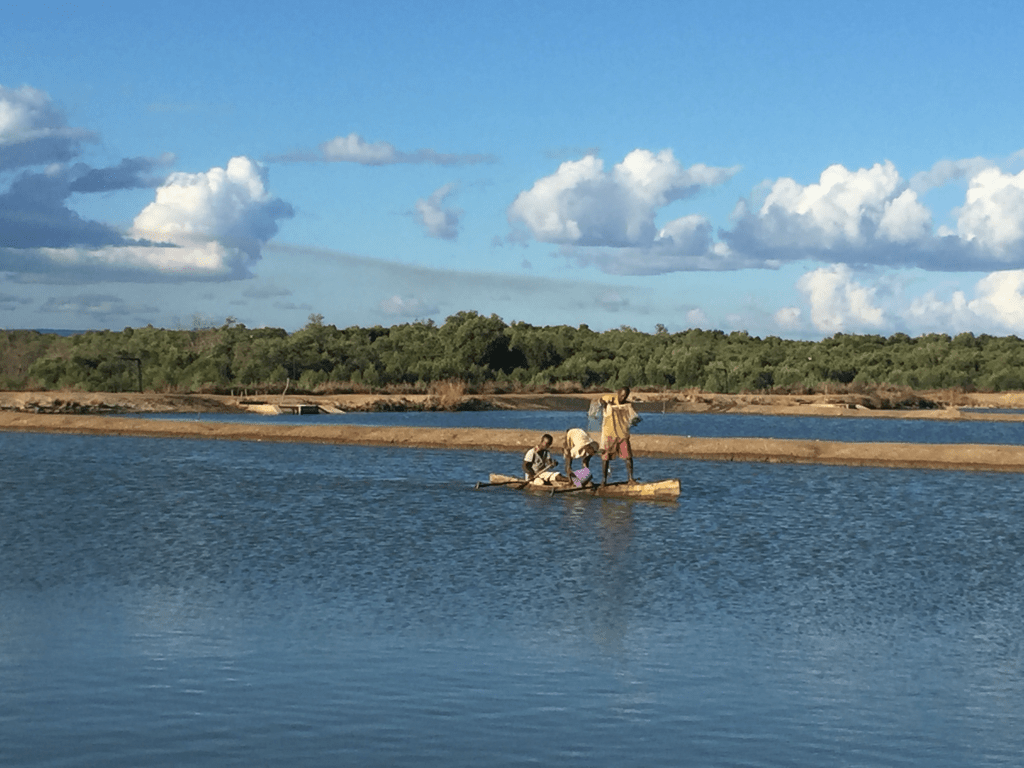
Photo Credit: Alexandra Pounds
Tilapia: Intensive or Extensive, ponds or cages, polyculture or monoculture
If there was an award for “The Miracle Fish”, tilapia would win the prize. They will grow and reproduce in a variety of conditions and circumstances. As such, they are a nutritious staple in many developing countries that struggle with food security, such as Bangladesh or Egypt.
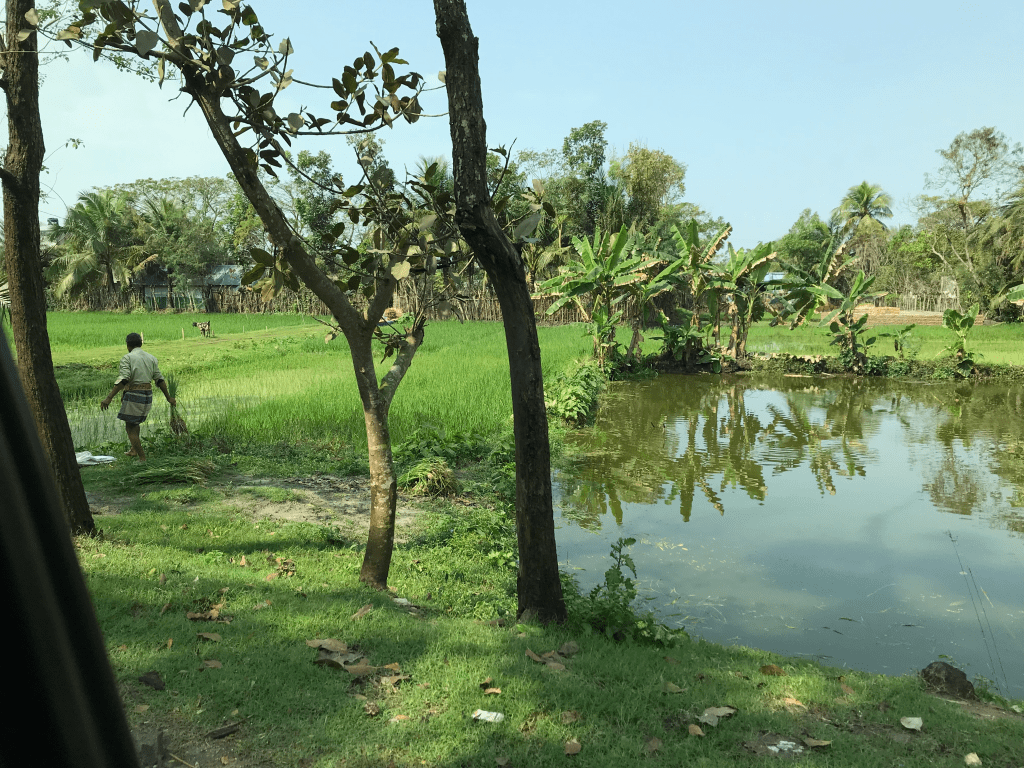
Photo Credit: Alexandra Pounds
 Fish By The Pounds